Listening Practice
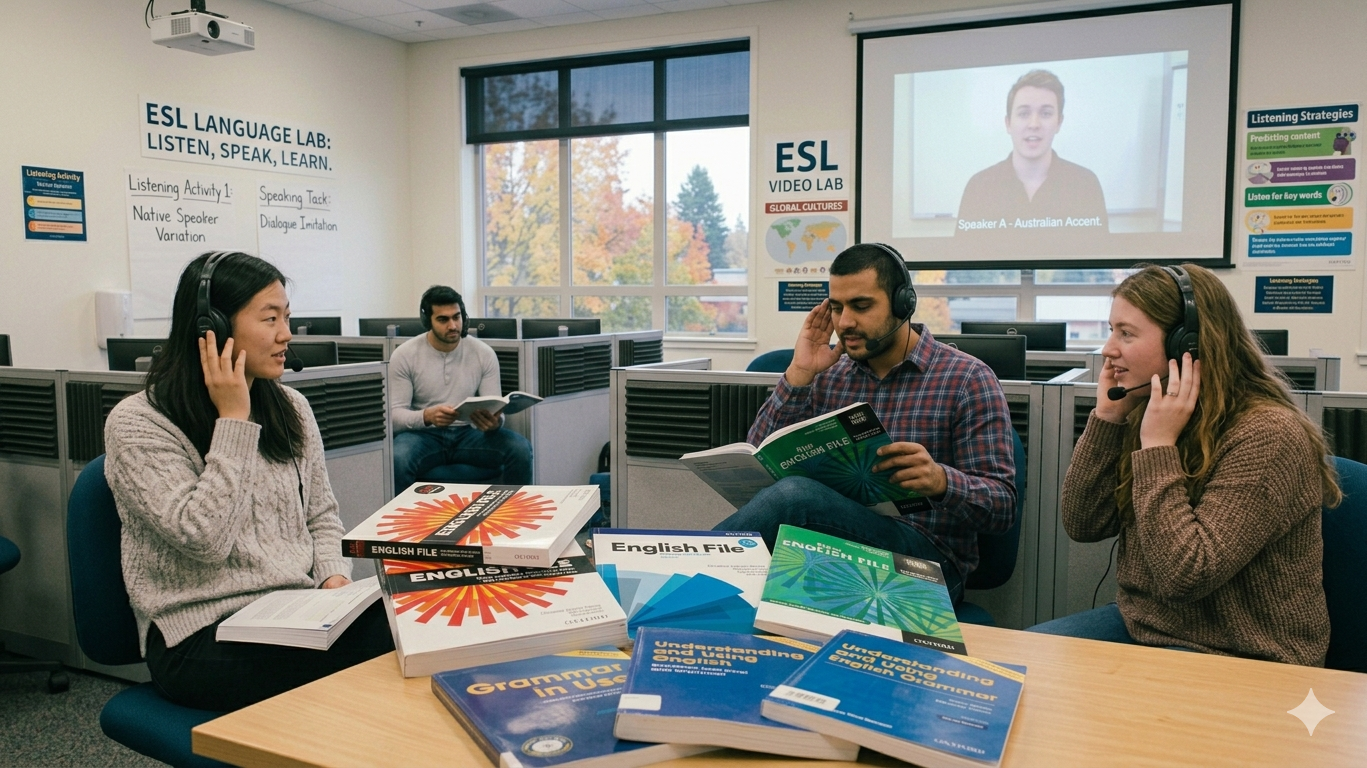
Listening Skills
Our ESL learners improve their listening skills through engaging audio lessons and real-life conversations. They have the flexibility to choose listening activities that match their level and learning goals. We also provide a variety of listening practices, including daily conversations, stories, and guided audio lessons.
Listening Library
Our ESL learners are encouraged to practice listening through a variety of engaging audio materials. They explore conversations, stories, and lessons that are regularly added to our listening library. This helps learners improve comprehension and build confidence in understanding spoken English.
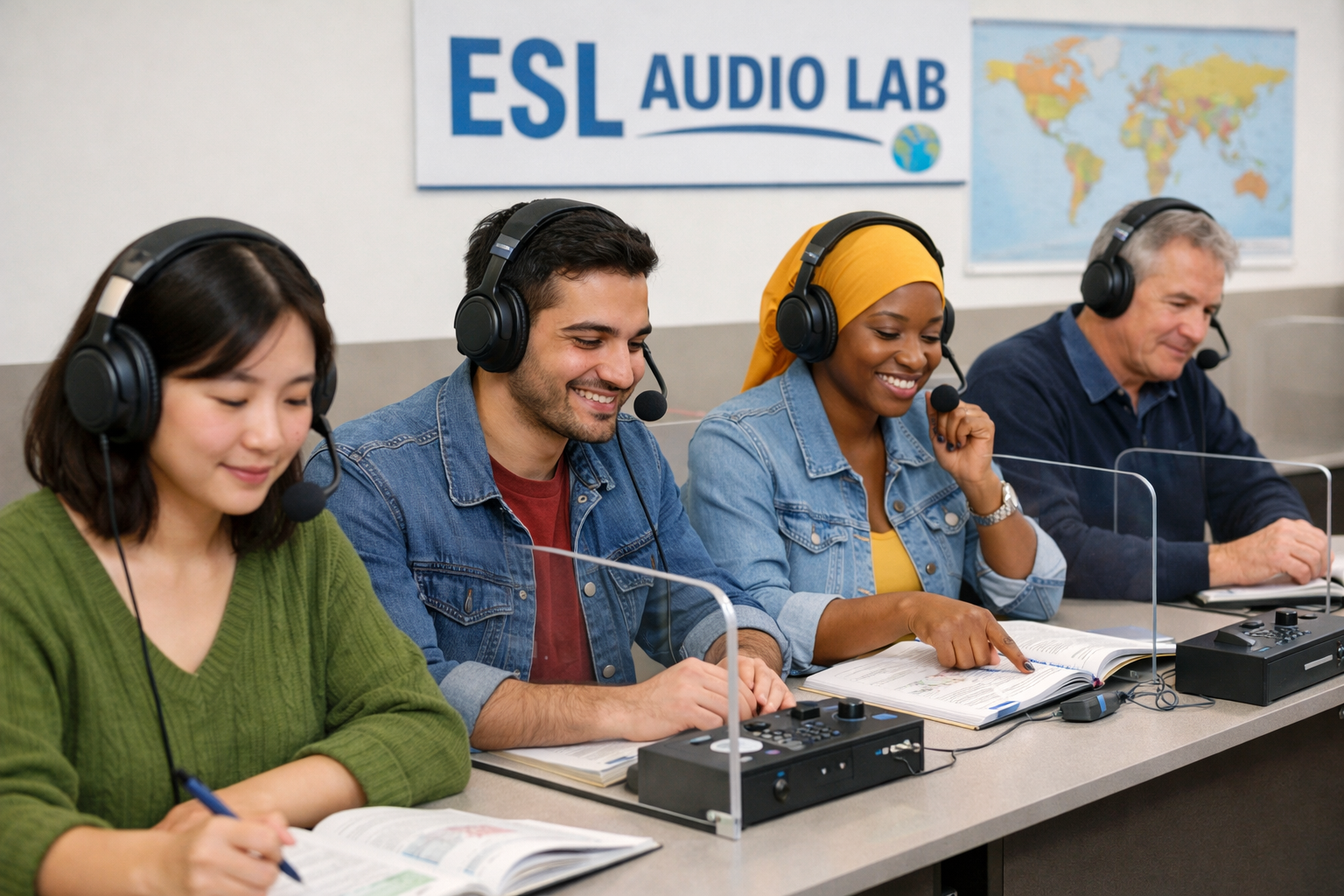

Listening Program
With guided audio lessons and structured listening activities, we support ESL learners in developing strong listening skills. We provide conversations, stories, and real-life listening practice to help learners improve understanding and confidence. Our listening program encourages learners to build their skills and grow in their English learning journey.
Listening with Reading the Transcript and Practice shadowing
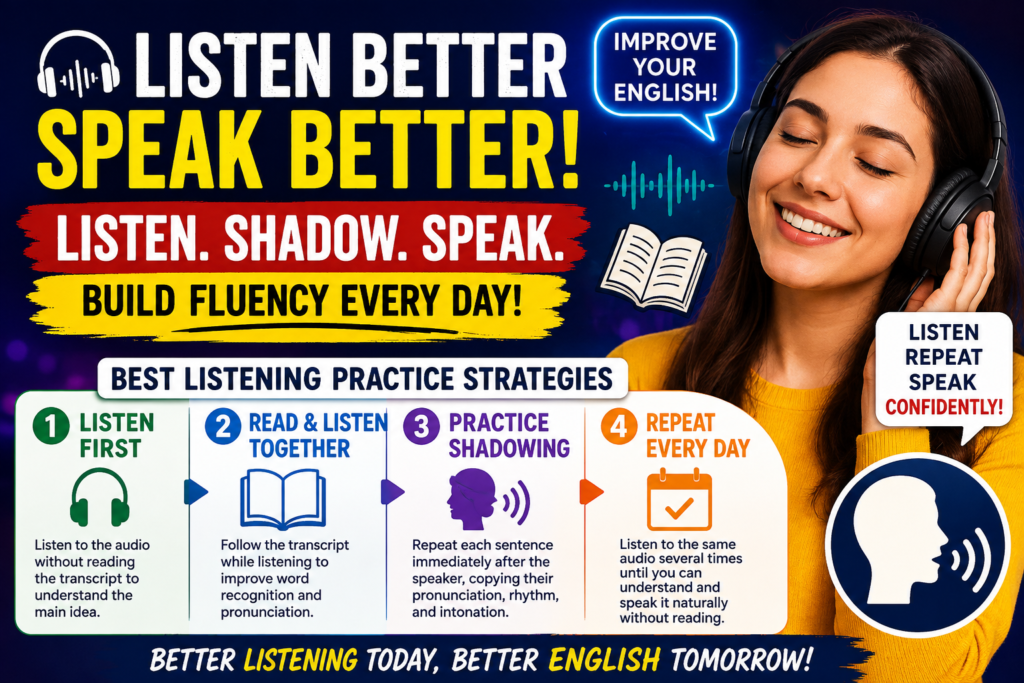
Best Listening Practice Strategies-Beginners level
Press the plus (+) sign below to view the transcript for each audio
Read Along with the Transcript
1. Greeting
A: Hi, Tom! How are you?
B: Hi, Amy! I’m fine, thank you.
A: That’s good to hear.
B: How about you?
A: I’m great, thanks!
2. Introduction
A: Hello! My name is Lisa.
B: Hi, Lisa. I’m John.
A: Nice to meet you.
B: Nice to meet you too.
A: Have a nice day!
3. Goodbye
A: I have to go now.
B: Okay. See you later!
A: Take care.
B: You too.
A: Goodbye!
4. Time Telling
A: Excuse me. What time is it?
B: It’s three o’clock.
A: Thank you very much.
B: You’re welcome.
A: Have a nice day!
5. Asking for Directions
A: Excuse me. Where is the library?
B: Go straight and turn left.
A: Is it far?
B: No, it’s just around the corner.
A: Thank you very much!
6. Talking About the Weather
A: It’s a beautiful day today.
B: Yes, it’s sunny and warm.
A: I like this weather.
B: Me too. It’s perfect for a walk.
A: Let’s go to the park.
B: Great idea!
7. Ordering Food at a Restaurant
A: Hello. I’d like a cheeseburger, please.
B: Sure. Would you like fries with that?
A: Yes, please, and a bottle of water.
B: Anything else?
A: No, that’s all. Thank you.
B: You’re welcome. Your order will be ready soon.
8. Talking About a Book
A: What book are you reading?
B: I’m reading The Little Prince.
A: Is it a good book?
B: Yes, it’s very interesting and easy to read.
A: I want to read it too.
B: I’m sure you’ll enjoy it.
9. Sports-Related Talk
A: What is your favorite sport?
B: My favorite sport is soccer.
A: Do you play soccer every week?
B: Yes, I play with my friends on Saturdays.
A: That sounds like fun!
B: Yes, I really enjoy it.
Real-Life Conversations for Intermediate ESL Learners
Improve Your English Listening Skills
Press the plus (+) sign below to view the transcript for each audio.
1. Greeting
A: Hi, Emma! It’s been a long time. How have you been?
B: Hi, Daniel! I’ve been doing well. How about you?
A: I’ve been great, but work has been very busy.
B: I understand. I’ve had a busy schedule too.
A: It’s nice to see you again.
B: It’s always a pleasure to catch up with you.
A: We should meet more often.
B: I completely agree!
2. Introduction
A: Hello! I don’t think we’ve met before. I’m Kevin.
B: Nice to meet you, Kevin. I’m Sophia.
A: Is this your first time attending this class?
B: Yes, it is. I’m excited to improve my English.
A: That’s wonderful. Everyone here is very supportive.
B: I’m glad to hear that.
A: I hope we can practice together.
B: I’d really like that.
3. Time Telling
A: Excuse me, do you know what time it is?
B: Yes, it’s a quarter past three.
A: Thank you. Is the meeting at 3:30?
B: Yes, it starts in fifteen minutes.
A: Great. I have enough time to get there.
B: Don’t worry. You’re right on time.
A: Thanks for your help.
B: You’re very welcome.
4. Asking for Directions
A: Excuse me, could you tell me how to get to the museum?
B: Of course. Walk straight for two blocks.
A: Should I turn left or right after that?
B: Turn right at the traffic light.
A: Is the museum near the park?
B: Yes, it’s right across from the park.
A: Thank you for your directions.
B: You’re welcome. Have a great visit!
5. Describing People
A: Can you describe your new teacher?
B: Sure. She’s tall with long brown hair.
A: What is she like?
B: She’s very kind, patient, and friendly.
A: Does she explain lessons clearly?
B: Yes, she always makes learning easy to understand.
A: She sounds like a great teacher.
B: She really is.
6. Talking About Travel
A: Have you traveled anywhere recently?
B: Yes, I visited San Diego last month.
A: How was your trip?
B: It was amazing. The beaches were beautiful.
A: What did you enjoy the most?
B: I loved the food and the ocean views.
A: I’d like to visit there someday.
B: I’m sure you’ll have a wonderful time.
7. Asking About Hobbies
A: What do you usually do in your free time?
B: I enjoy reading books and playing tennis.
A: That sounds interesting. How often do you play?
B: I usually play every Saturday morning.
A: Do you have any other hobbies?
B: Yes, I also enjoy taking photographs when I travel.
A: That’s a creative hobby.
B: It helps me relax and remember special moments
8. Talking About Transportation
A: How do you usually get to work?
B: I usually take the subway because it’s fast and convenient.
A: Have you ever thought about driving instead?
B: I have, but traffic is usually too heavy.
A: That makes sense. Public transportation saves time sometimes.
B: Yes, and it’s also less expensive than driving every day.
A: I might start using the subway too.
B: I think you’ll find it very convenient.
9. Food Choice
A: What would you like to eat for dinner tonight?
B: I’m thinking about having grilled chicken with vegetables.
A: That sounds healthy. I was considering pasta.
B: Pasta is a great choice too. What’s your favorite kind?
A: I really enjoy spaghetti with tomato sauce.
B: That sounds delicious. Maybe we can order both dishes.
A: Great idea! We can share our meals.
B: Perfect! That way we can try something different.
10. Talking About a Book
A: Have you read any interesting books recently?
B: Yes, I just finished a mystery novel last week.
A: Did you enjoy it?
B: I did. The story was exciting from beginning to end.
A: Who was your favorite character?
B: The detective was my favorite because he was very clever.
A: I think I’ll read that book next.
B: I’m sure you’ll enjoy it as much as I did.
11. Talking About Family
A: Tell me a little about your family.
B: I have two brothers and one younger sister.
A: Do you all live in the same city?
B: No, my sister lives in another state for college.
A: Do you get together often?
B: Yes, we usually meet during holidays and family celebrations.
A: That sounds wonderful. Family time is very important.
B: I agree. I always look forward to seeing everyone
Food and Healthy Eating Habits
Food is an important part of our daily lives because it gives us the energy and nutrients our bodies need to grow, learn, and stay active. A balanced diet can include a variety of fruits, vegetables, whole grains, beans, eggs, fish, meat, and dairy or other nutritious alternatives. Eating different kinds of foods helps us get important nutrients such as protein, vitamins, minerals, fiber, and healthy fats.
Good eating habits are also important. It is helpful to eat regular meals, drink enough water, include fruits and vegetables, and choose a variety of nutritious foods. Some good choices include apples, bananas, oranges, carrots, spinach, beans, oatmeal, eggs, yogurt, fish, and nuts. Rather than focusing on one “best” food, a healthy eating pattern includes different nutritious foods and reasonable portions.
Master Advanced English Listening
Develop your English listening skills through natural conversations, authentic vocabulary, and advanced expressions.
Below, you can find the transcript for each audio by pressing the plus (+) sign.
Read Along with the Transcript
1. Greeting
A: Good morning, Sarah. It’s a pleasure to see you again.
B: Good morning, James. Likewise. How have things been going?
A: Quite well, although the past few weeks have been rather hectic.
B: I can certainly relate to that. Work has been exceptionally demanding lately.
A: Have you managed to find any time to relax?
B: Not as much as I’d like, but I’m trying to make more time for myself.
A: That’s important. We all need a chance to recharge.
B: Absolutely. Otherwise, it’s easy to become overwhelmed.
A: Perhaps we should catch up properly over coffee sometime.
B: I’d be delighted. Let’s arrange something soon.
2. Introducing Another Person to Your Friend
A: Michael, I’d like you to meet my friend, Daniel.
B: It’s a pleasure to meet you, Daniel. I’ve heard quite a bit about you.
C: It’s a pleasure to meet you too. I hope you’ve heard good things!
A: I certainly have. Daniel and I worked together on a community project last year.
B: That’s interesting. What kind of project was it?
C: We helped organize educational programs for local students.
B: That sounds rewarding. Are you still involved in that work?
C: Yes, although I’m currently focusing on a new project.
A: I think you two have quite a few interests in common.
B: It certainly sounds that way. I’d love to hear more about your work.
3. Time Telling
A: Excuse me, do you happen to know what time it is?
B: It’s about twenty-five past four.
A: Thanks. I was supposed to meet someone at half past four.
B: You still have a few minutes, then.
A: Yes, although I’d better hurry. The meeting location is a few blocks away.
B: If you take the shortcut through the park, you’ll probably get there faster.
A: That’s helpful. Do you think I’ll make it on time?
B: I don’t see why not, provided you leave now.
A: I appreciate the advice.
B: You’re welcome. I hope your meeting goes well.
4. Expressing Agreement
A: I think schools should provide students with more opportunities for practical learning.
B: I completely agree. Classroom knowledge is much more useful when students can apply it in real situations.
A: Exactly. It also helps students understand why what they’re learning matters.
B: That’s a good point. Practical experience can also build confidence.
A: And it can prepare students for their future careers.
B: Absolutely. Employers often value problem-solving and communication skills.
A: I couldn’t agree more. Those skills are useful in almost every profession.
B: Definitely. They can also help people adapt to changing circumstances.
A: So, we seem to be on the same page.
B: We certainly are.
5. Expressing Disagreement
A: I think working from home is always more productive than working in an office.
B: I see your point, but I’m not sure I completely agree.
A: What makes you feel that way?
B: Some people work better at home, but others benefit from direct interaction with their colleagues.
A: That’s true. Communication can sometimes be more difficult remotely.
B: Exactly, especially when a project requires frequent collaboration.
A: On the other hand, working from home can reduce distractions.
B: I agree with that, but I think it depends on the person and the type of work.
A: That’s a fair argument. Perhaps there isn’t one solution that works for everyone.
B: I think that’s the best way to look at it.
6. Talking About a Movie
A: Did you watch the new science-fiction movie that came out last weekend?
B: Yes, I did. I found it surprisingly thought-provoking.
A: I felt the same way. The story was much deeper than I expected.
B: I particularly enjoyed the way it explored the relationship between technology and society.
A: The acting was impressive as well, especially the lead actor’s performance.
B: Definitely. I thought the character development was one of the strongest parts of the movie.
A: Were you satisfied with the ending?
B: Not entirely. It was interesting, but I thought it left too many questions unanswered.
A: I actually liked that aspect because it gave me something to think about afterward.
B: Fair enough. I suppose that’s what makes a movie memorable.
7. Asking About Further Plans
A: So, what are your plans after you finish this course?
B: I’m hoping to find a job where I can use my English more frequently.
A: That sounds like a great next step. Have you started looking yet?
B: I’ve looked at a few opportunities, but I haven’t applied anywhere yet.
A: Are you considering continuing your education as well?
B: Yes, I’d like to take an advanced communication course next year.
A: That could be a valuable addition to your professional skills.
B: I agree. I’d also like to travel more so I can practice English in different situations.
A: Do you have any particular destinations in mind?
B: Not yet, but I’m hoping to make some definite plans soon.
8.Interview: A New Medical Discovery
Journalist: Good evening, Dr. Carter, and welcome to our program.
Thank you for joining us to discuss your team’s exciting medical discovery.
Your research has recently attracted a great deal of attention.
Could you explain what this new medicine is designed to treat?
And what makes it different from existing treatments?
Medical Scientist: Thank you for having me; it’s a pleasure to be here.
Our team has developed a new experimental medicine designed to treat a serious inflammatory disease.
In early laboratory and clinical research, the medicine has shown promising results.
It appears to target a specific process in the body that contributes to inflammation.
However, we are still studying its effectiveness and possible side effects.
We need more research and carefully controlled trials before we can determine whether it is safe and effective for widespread use.
Journalist: That’s certainly encouraging, but many people may wonder when this medicine could become available to patients.
What are the next steps your research team needs to complete before it can be approved?
Medical Scientist: The next step is to conduct larger clinical trials involving more participants.
These studies will help researchers understand how well the medicine works and identify any potential risks.
The results must then be carefully reviewed by medical and regulatory experts.
If the evidence shows that the medicine is both safe and effective, the appropriate health authorities may consider approving it.
We understand that patients are eager for new treatments, but medical research must be thorough and carefully controlled.
Our priority is to make sure that any medicine we develop provides real benefits while protecting patients’ safety.
9.Economic News: Understanding Today’s Changing Economy
The global economy continues to change as countries respond to inflation, interest rates, employment trends, and changes in consumer spending. When prices rise quickly, households may have less money available for other purchases, while businesses may face higher costs for materials, transportation, and labor. Central banks often respond to high inflation by adjusting interest rates, which can influence borrowing, investment, and economic growth. For advanced English learners, understanding these economic terms is useful because they frequently appear in newspapers, business reports, and everyday conversations.
Another important economic issue is the labor market. Employment levels, wages, and productivity can provide valuable information about the strength of an economy. When companies hire more workers and wages increase, consumers may have more money to spend, which can support businesses and economic growth. However, if companies reduce hiring because of higher costs or weaker demand, economic activity may slow down. Economists therefore examine employment reports and other indicators to understand whether an economy is expanding or losing momentum.
International trade is also an important part of the modern economy. Countries depend on one another for products, energy, technology, raw materials, and services, so economic changes in one country can affect businesses and consumers in many others. Changes in exchange rates, trade policies, energy prices, and global demand can influence the cost of imported goods and the competitiveness of exporters. For students learning advanced English, following economic news is an excellent way to develop vocabulary while learning how financial decisions and global events can affect everyday life.
10.News Report: Ongoing Wildfire
News Reporter: Good evening. I’m reporting from the area where a rapidly spreading wildfire continues to threaten several communities. Strong winds have made it difficult for firefighters to contain the flames, while thick smoke has reduced visibility across the region. Emergency crews are working around the clock to protect homes and critical infrastructure, and evacuation orders have been issued in some areas as a precaution. Officials are urging residents to follow emergency instructions, avoid restricted areas, and remain alert for further updates as conditions can change quickly.
The fire has already caused significant damage, destroying homes and damaging roads, power lines, and other property. Several residents have been forced to leave their homes, while emergency shelters have been opened to provide temporary assistance. Firefighters are using ground crews and aircraft to slow the fire’s progress, but changing weather conditions continue to create challenges. Authorities say their immediate priorities are protecting lives, containing the wildfire, and assessing the full extent of the damage once it is safe to enter affected areas.
